If you live in Tampa Bay, you’ve probably heard someone say, “My home is smart.” Then you walk in and realize what they really mean is: they have a few smart bulbs, a doorbell camera, and a voice assistant sitting on the kitchen counter.
That is not a smart home.
In Florida homes, especially in Tampa’s heat, humidity, and storm season, there’s a big difference between owning smart devices and living in a smart home system that’s reliable, secure, and built to last. One is a collection of gadgets. The other is a coordinated environment that works quietly in the background.
This guide breaks down what “actually works” in Tampa homes, what fails most often, and how homeowners can build a smart home the right way.
What Is a “Smart Device” Setup?
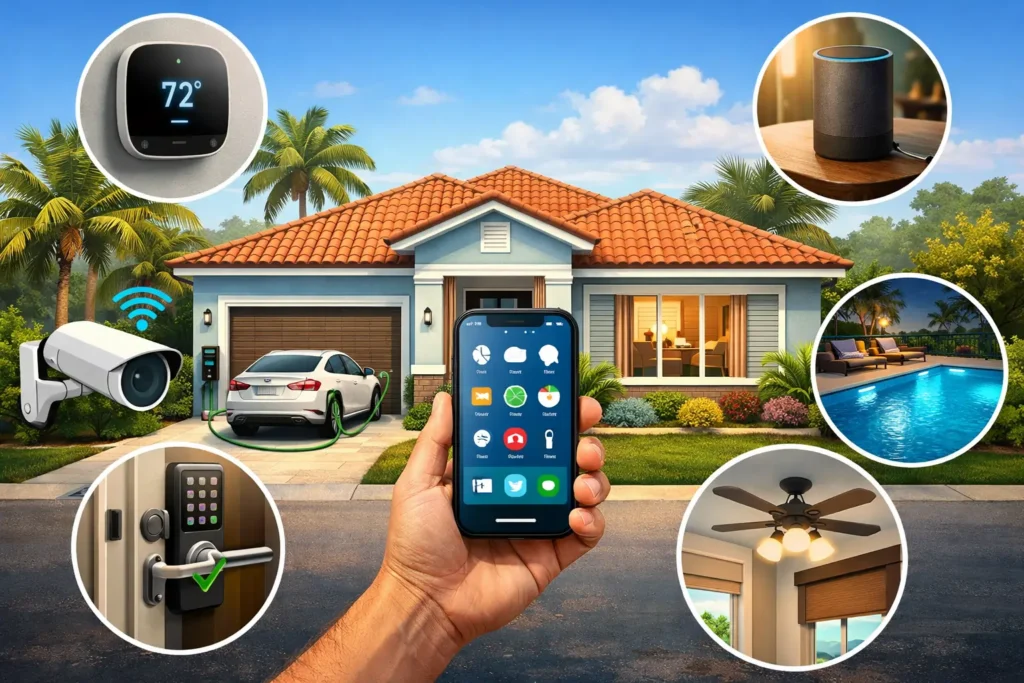
A smart device setup is usually built by purchasing individual products over time. Examples include:
- A smart doorbell
- A few smart bulbs
- A Wi-Fi thermostat
- One indoor camera
- A smart speaker like Alexa or Google Assistant
This approach can be useful for getting started. But it has limitations that show up fast in real Florida living.
Where Smart Device Setups Typically Break Down
- Too many apps and logins
- Unreliable Wi-Fi coverage (common in stucco and older builds)
- Devices stop responding after updates
- Motion triggers or automations become annoying or inconsistent
- Outdoor devices fail early due to moisture, heat, and salt air
- No true “scenes” across multiple systems (lights + shades + climate + audio)
In other words: you can own smart devices and still live in a home that feels manual.
What Makes a Home Truly “Smart”?
A smart home is not defined by how many devices you own. It’s defined by how well everything works together.
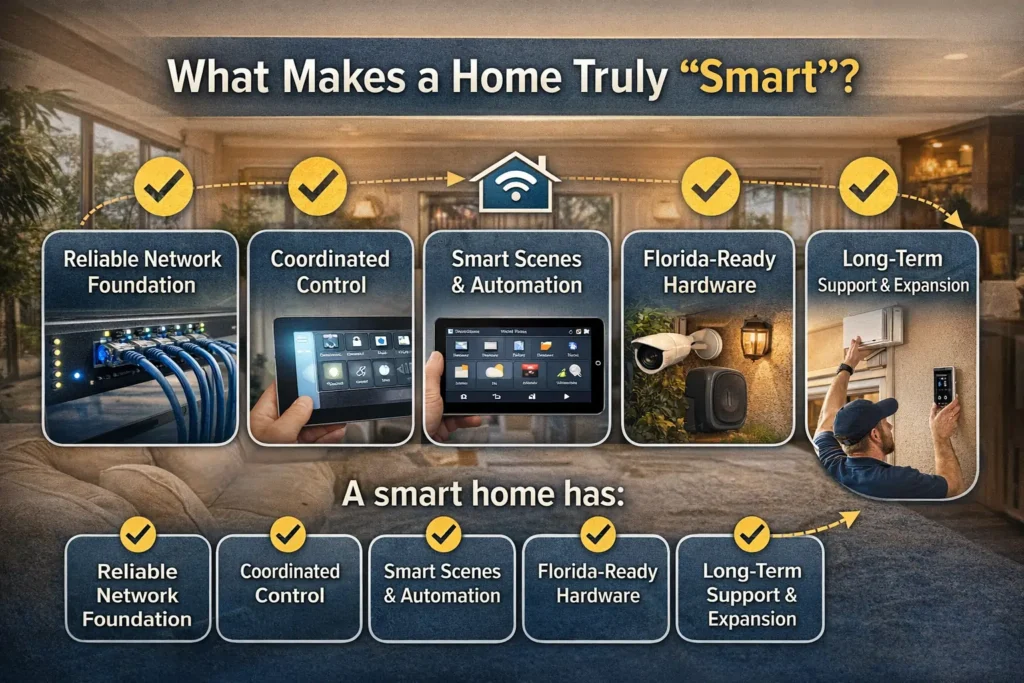
A real smart home has:
- A reliable network foundation
- Coordinated control (one app, one system, consistent behavior)
- Smart scenes and automation that match your lifestyle
- Hardware designed for Florida conditions
- Long-term support and the ability to expand without redoing everything
A smart home feels simple. You don’t have to think about it constantly. It just works.
Why Florida Homes (Especially Tampa) Are Different
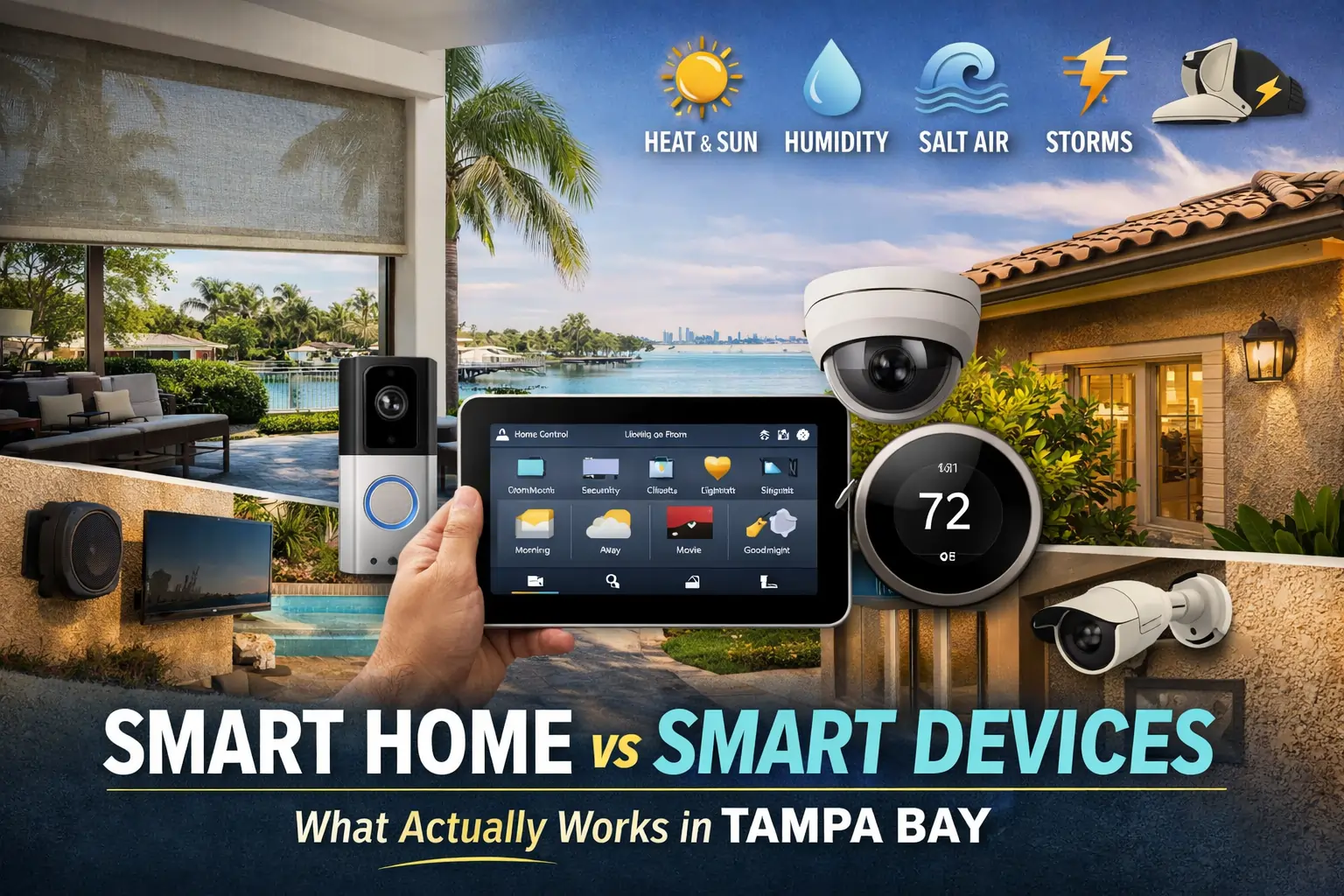
Many national “smart home” recommendations ignore Florida realities. Tampa Bay homes deal with:
Heat and Intense Sun
West-facing glass can turn rooms into ovens. That impacts comfort and also device reliability in sunny areas.
Humidity and Moisture
Humidity affects everything from outdoor wiring to equipment racks and camera enclosures.
Salt Air (Coastal Tampa and Beach Areas)
Salt accelerates corrosion. Outdoor gear needs to be selected and installed accordingly.
Storms and Power Issues
Surges and outages are common. Without surge protection and backup power, smart systems can fail or become unstable.
Construction Materials That Hurt Wi-Fi
Stucco, block, plaster, and certain insulation types can create dead zones and inconsistent device performance.
This is why what “works” in other states often fails here unless it’s designed properly.
Smart Home vs Smart Devices: The Real Comparison
Ease of Use
Smart Devices: Multiple apps, inconsistent controls
Smart Home: One system, unified scenes, predictable behavior
Reliability
Smart Devices: Depends on Wi-Fi and individual brands
Smart Home: Built on a designed network, wired where it matters
Scalability
Smart Devices: Adding more devices often creates more problems
Smart Home: Designed to expand without rework
Security
Smart Devices: Often weak defaults, scattered accounts, inconsistent updates
Smart Home: Network security, controlled access, professional configuration
Florida Durability
Smart Devices: Many fail outdoors within a few seasons
Smart Home: Weather-rated equipment, proper placement, protected wiring
What Actually Works in Tampa Homes
Below are the smart home upgrades that consistently perform well in Tampa Bay when installed correctly.
1. Motorized Shades and Heat Control
In Tampa, motorized shades are not just a luxury. They’re practical.
They reduce heat gain, block glare, protect interiors from UV damage, and can be automated around the sun.
What works best:
- Solar shades for living areas that preserve the view while reducing heat
- Blackout shades for bedrooms, nurseries, and media rooms
- Automation based on sun exposure (especially west and south-facing windows)
- Hardwired options for high-use areas in new builds, battery solutions for retrofits
This is one of the highest-impact upgrades for comfort and energy efficiency in Florida.
2. Lighting Scenes (Not Just Smart Bulbs)
Smart bulbs are fine for a lamp. But for real homes, you want scene-based lighting.
What works best:
- Smart dimmers and keypads (more reliable than Wi-Fi bulbs)
- Whole-home scenes like Morning, Entertain, Away, and Goodnight
- Motion logic that is time-aware (different behavior daytime vs night)
- Outdoor lighting scenes that improve safety and curb appeal
In Tampa, lighting scenes also support security because a well-lit home feels occupied and protected.
3. A Proper Home Network
This is the foundation most DIY systems skip. In Tampa homes, network issues are the number one reason smart devices “randomly stop working.”
What works best:
- Wired access points (not just a single router)
- A designed layout based on home materials and square footage
- Hardwiring key devices (TV locations, racks, access points, cameras)
- Segmentation for smart devices so they don’t compete with streaming and work traffic
When the network is right, everything else becomes more reliable.
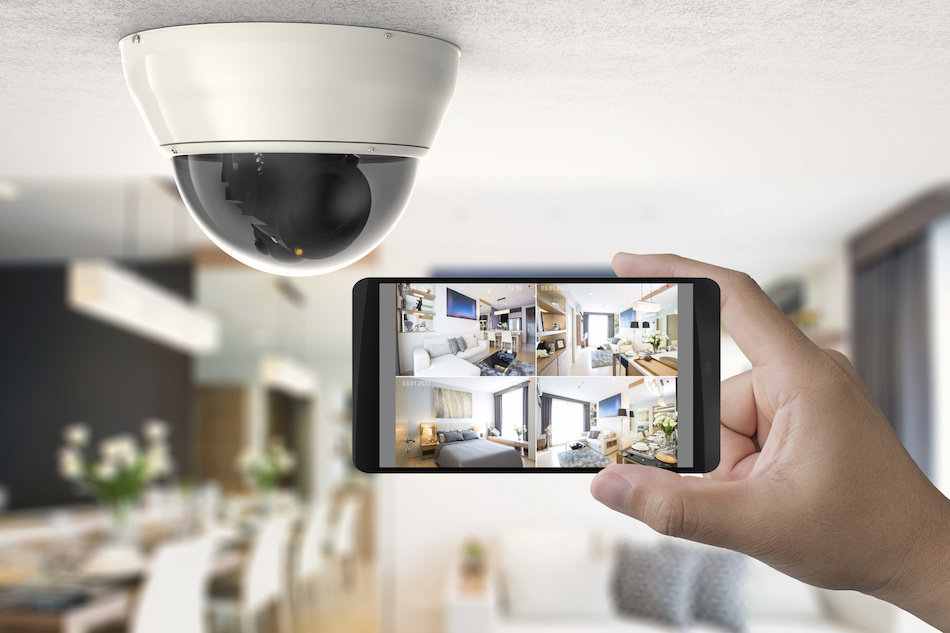
4. Security That’s Designed, Not Random
Many homeowners start with a doorbell camera and add cameras one by one. The result is gaps, inconsistent coverage, and weak storage.
What works best:
- Camera placement planned for coverage, not just “where it’s easy”
- Hardwired PoE cameras for reliability
- Proper lighting paired with security zones
- Smart locks with managed codes for family, guests, and vendors
- Local storage or robust retention planning
Security is one of the categories where professional planning matters most.
5. Outdoor Technology Built for Florida
Outdoor TVs, speakers, and Wi-Fi are huge in Tampa because outdoor living is part of the lifestyle.
But this is also where “cheap” gear fails quickly.
What works best:
- Weather-rated outdoor speakers and displays
- Protected power and proper mounting
- Outdoor Wi-Fi designed for patios, pools, and lanais
- Lighting systems that enhance visibility without glare
The Most Common Tampa Mistake: Buying Devices Before Planning
A lot of homeowners do this:
- Buy devices on sale
- Install them one-by-one
- Realize nothing works together
- Call a professional when it becomes frustrating
That’s backwards.
The right way is to plan:
- What you want your home to do
- Which rooms matter most
- What needs to be wired
- What should be automated vs manually controlled
- How the network and power will support the whole system
Planning first saves money because you avoid replacing devices that aren’t compatible long-term.
A Simple “Smart Home” Starter Plan for Tampa
If you want something practical and scalable, this order works well:
Phase 1: Foundation
- Network assessment and upgrades
- Central control strategy (so you don’t end up with five apps)
Phase 2: Comfort and Efficiency
- Motorized shades in key sun-exposed rooms
- Lighting scenes in main living zones
- Smart thermostat integration
Phase 3: Security and Outdoor Living
- Cameras and entry control
- Outdoor lighting
- Outdoor audio and patio Wi-Fi
This builds a smart home in a way that stays stable and avoids messy rework.
Smart Home Systems Are Not About More Tech. They’re About Less Effort.
The best smart homes feel calm.
You don’t think about lights, because they adjust naturally. You don’t fight the thermostat, because the system is tuned to your routine. You don’t worry about arriving home at night, because exterior lighting responds automatically.
That’s what makes a home truly smart in Tampa: reliability, comfort, and a system built for Florida conditions.
Book a Smart Home Consultation in Tampa Bay
Whether you’re starting fresh or you already have devices that aren’t working together, Hive can help you build a smart home that performs reliably in Florida.
We design and install smart home systems across Hillsborough, Pinellas, and Pasco Counties.
Start My Project or schedule your consultation today.
FAQs
Q1: Can I still use some of my existing smart devices?
A: Often yes. We can evaluate what you already own and integrate what makes sense, while replacing devices that create reliability issues.
Q2: Do I need to open walls to build a smart home?
A: Not always. Many upgrades can be done with retrofit-friendly solutions, and we only recommend wiring where it truly improves stability.
Q3: What’s the most important smart home upgrade in Tampa?
A: In Tampa, the best first investment is usually the network foundation, followed by motorized shades for heat control and lighting scenes.
Q4: Will a smart home help lower energy bills?
A: Yes. Strategic automation for shades, lighting, and thermostat scheduling can reduce cooling load and avoid wasted energy.
Q5: Is a smart home only for new construction?
A: No. Many of our favorite projects are retrofits. A smart home can be installed in older homes with the right planning.