If you’re planning to install smart home tech like motorized shades, AV systems, or outdoor security cameras, you’ve probably asked:
Do I really need a permit for this kind of wiring?
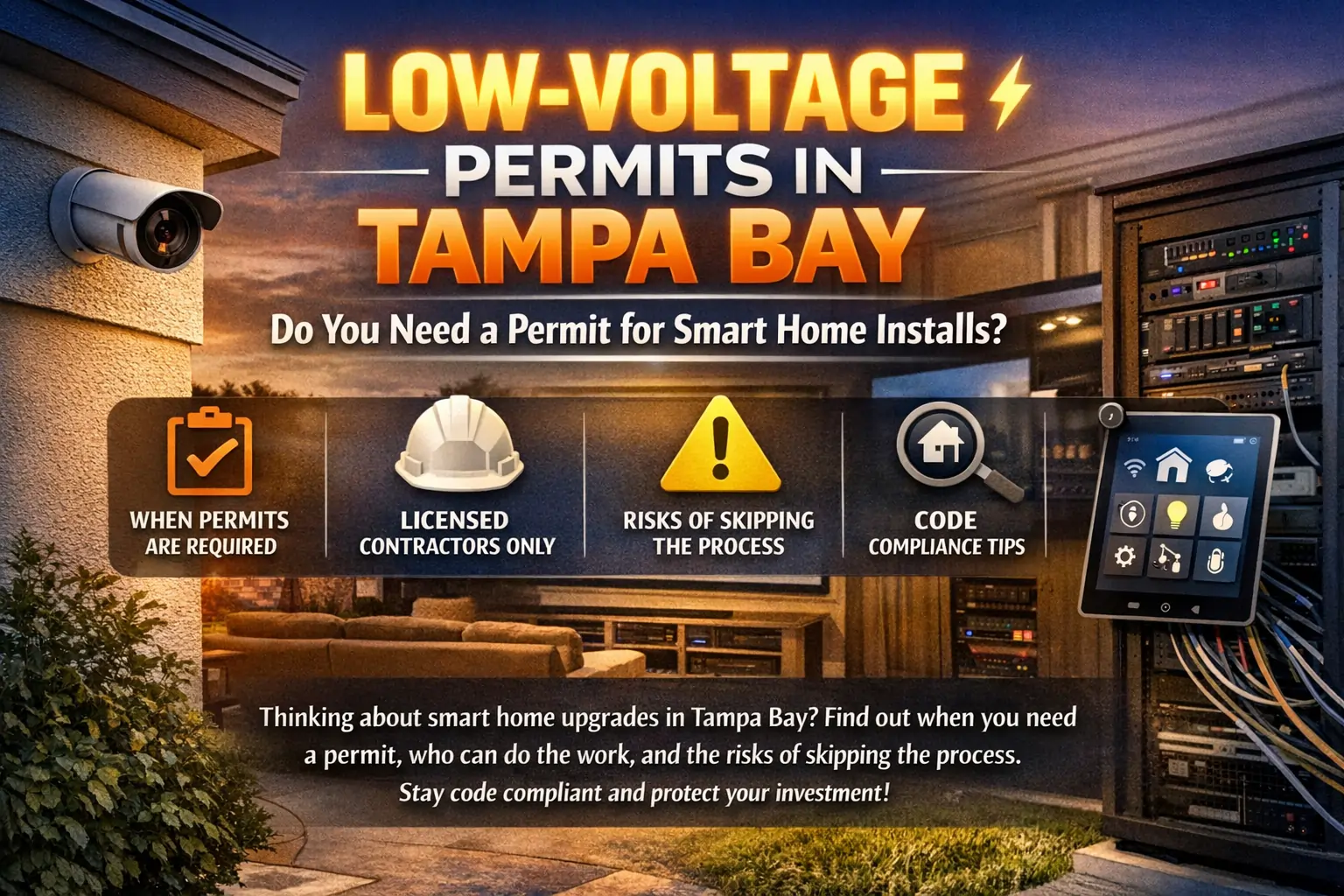
Here in Tampa Bay, the answer is often yes—and knowing when and why can save you time, money, and headaches down the line.
This guide will walk you through:
- What counts as low-voltage wiring
- When you need a permit
- Who can legally do the work
- What happens if you skip the process
Let’s break it down—because smarter homes start with smarter planning.
What Is Low-Voltage Wiring, and Why Does It Matter?
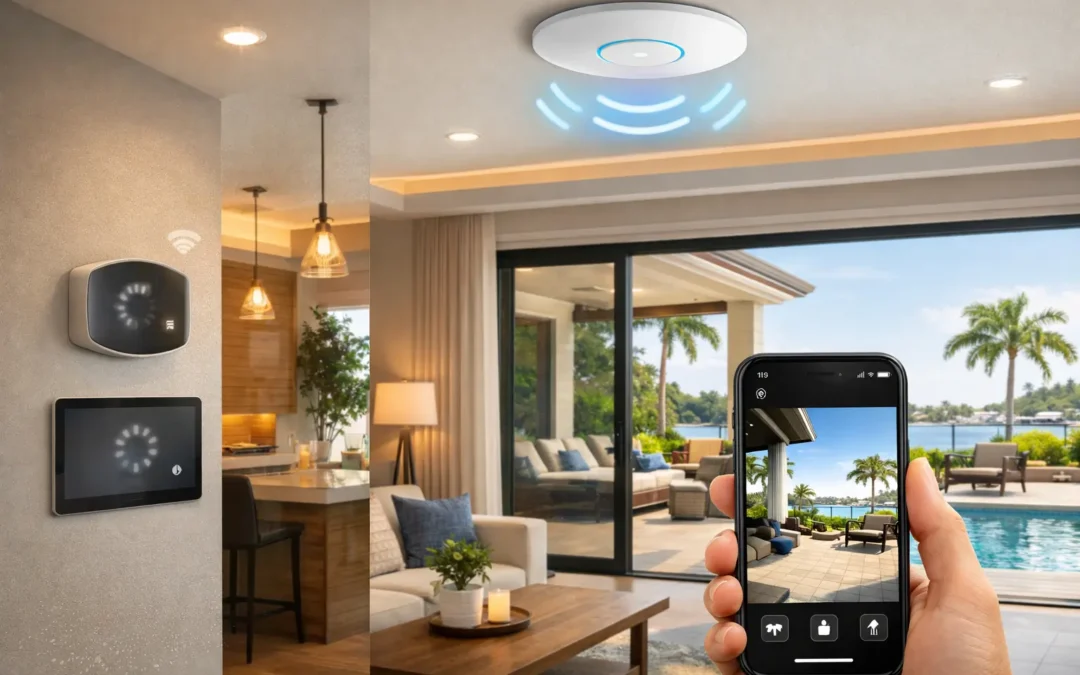
Low-voltage wiring powers the smart home features most homeowners want:
- Smart lighting control systems
- Whole-home Wi-Fi and Ethernet (Cat6, fiber, etc.)
- Security cameras, alarms, access control
- Audio/video distribution and home theaters
- Motorized window treatments
It runs on 50 volts or less—but don’t let the “low” in the name fool you. Low-voltage work is still regulated in Florida and must follow the National Electrical Code (NEC), fire safety rules, and local building codes.
Even if you’re not touching your home’s main electrical panel, your low-voltage system could require permitting, labeling, and inspection.
When Do You Need a Permit for Low-Voltage Work in Tampa Bay?
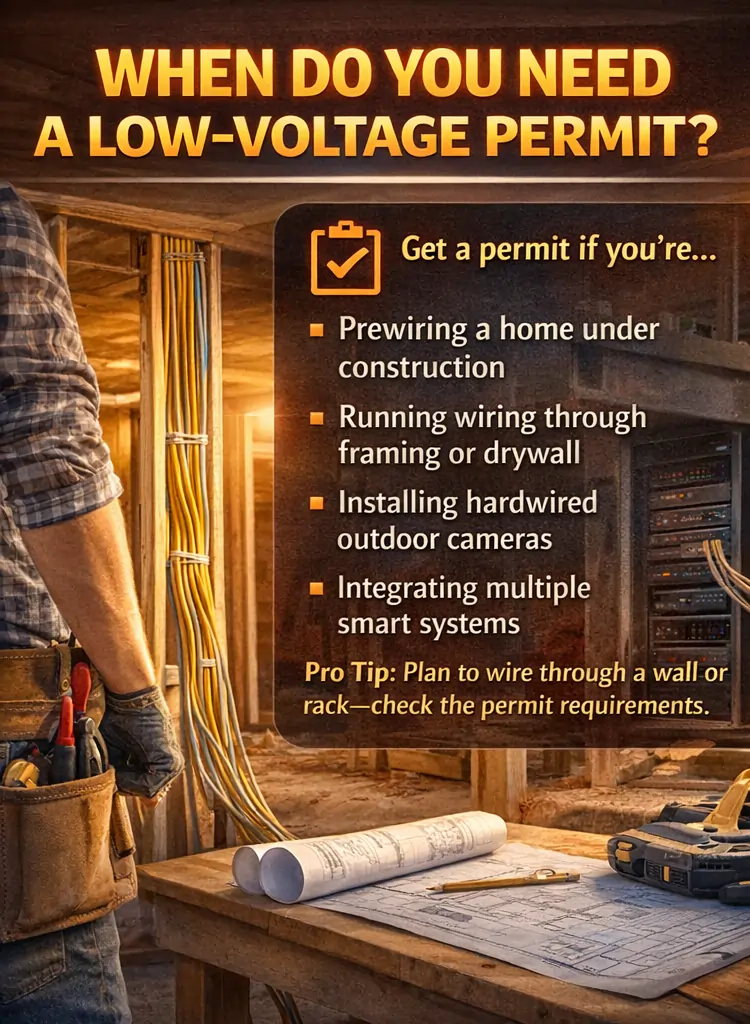
Let’s keep it simple. You likely need a permit if you’re:
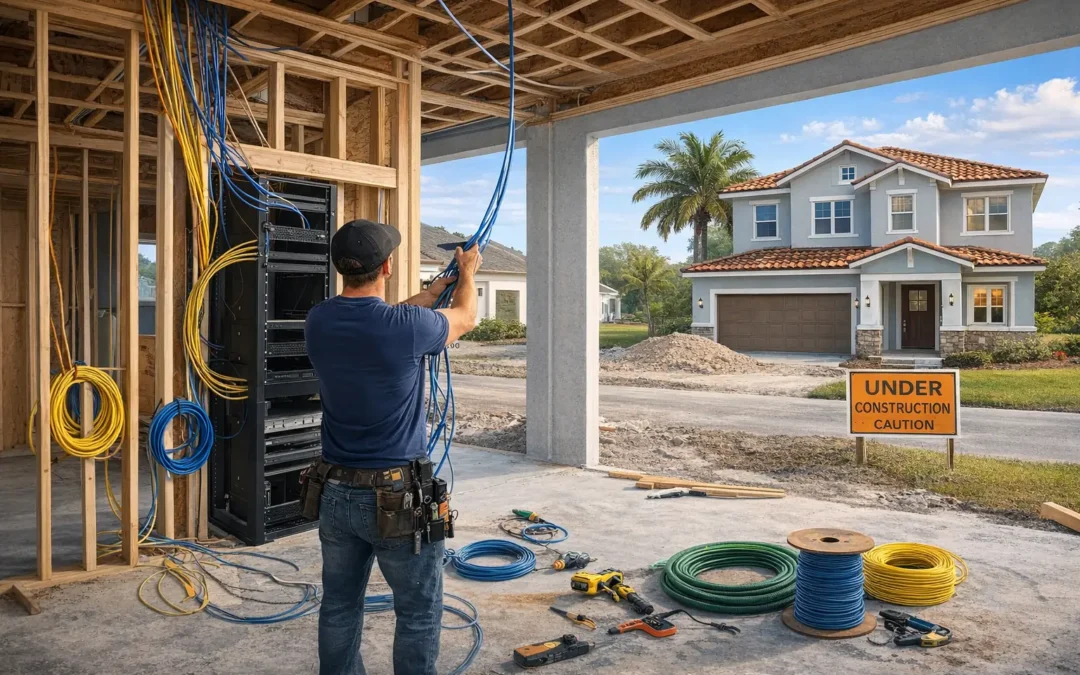
- Prewiring a home under construction
- Running wiring through framing or drywall
- Installing hardwired outdoor lighting or cameras
- Building a rack for centralized AV equipment
- Integrating multiple smart systems into a central controller
You likely don’t need a permit for:
- Plug-in smart speakers or hubs (Alexa, Google Nest)
- Battery-powered cameras or wireless devices
- Minor retrofits that don’t require cutting into walls
Pro tip: The moment you plan to wire through a wall, ceiling, or structured panel—check the permit rules. Hive will do this for you.
Who Can Legally Pull a Low-Voltage Permit in Florida?
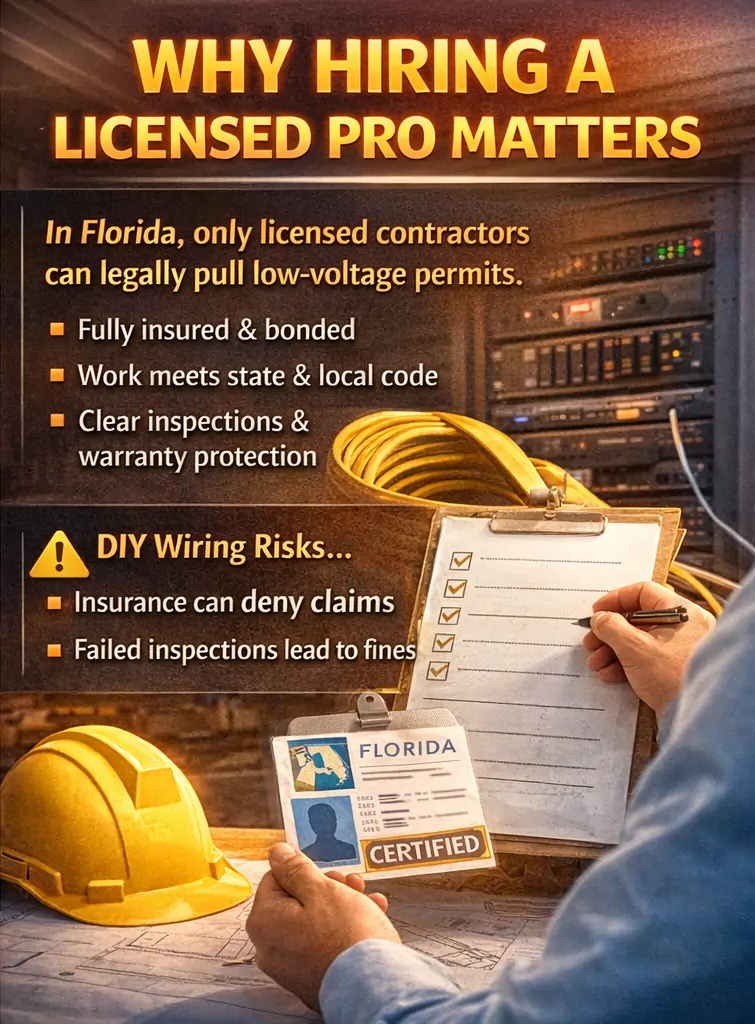
Low-voltage work in Florida must be done by a state-licensed contractor. There are two common types:
- EC License (Electrical Contractor) – For full electrical and low-voltage work
- ES License (Specialty Electrical Contractor – Limited Energy) – Focused on smart home and structured cabling
Hive operates under a Florida ES license and files all applicable permits on behalf of our clients.
We work directly with local inspectors, submit your paperwork, and manage final inspections so you don’t have to.
County-by-County: Where to Check Permit Requirements
We serve Hillsborough, Pinellas, and Pasco counties. Here’s where to verify permit requirements:
| County | Permit Office | Online Portal |
| Hillsborough | Building Services | hillsboroughcounty.org |
| Pinellas | Building & Development Review Services | pinellascounty.org |
| Pasco | Building Construction Services | pascocountyfl.net |
Don’t worry—we check all of this during the design process.
What Happens If You Skip the Permit?
This is where things get expensive. Without proper permitting:
- Your home may fail inspections when you go to sell it
- Your insurance may deny claims related to fire or damage
- Equipment warranties could be voided
- You risk fines, project shutdowns, or redoing the work entirely
We’ve seen it all. And we’ve fixed it all. Don’t let your dream smart home become a compliance nightmare.
How Hive Ensures 100% Code Compliance
From start to finish, here’s how we keep your project on the right track:
- Fully licensed in Florida for low-voltage work
- Provide wiring diagrams, system schematics, and labeled racks
- Coordinate with general contractors, electricians, and inspectors
- Use NEC and Florida Building Code standards on every job
- Attend inspections and close out permits properly
We’ve worked on hundreds of homes across Davis Islands, Hyde Park, Westchase, Carrollwood, and beyond. We know what local inspectors expect—and we build to exceed it.
Let’s Make Your Smart Home Fully Compliant
Planning a project? Already started? We’re here to guide you.
Hive will:
- Review your system plans
- Confirm which permits apply
- Handle all filings and inspections
Start My Project or Scheduled a Consultation.
FAQs
Q1: Do I need a permit for just a few smart switches or plugs?
A: If they’re wireless or plug-in, usually not. If you’re cutting into walls or wiring behind the scenes, you may need one.
Q2: Are outdoor security cameras covered?
A: Yes, if they’re wired. PoE (power-over-Ethernet) cameras and systems wired into a rack usually require a permit.
Q3: Can I pull my own permit as a homeowner?
A: Some counties allow this, but it comes with full responsibility. We recommend hiring a licensed pro—it’s faster and safer.
Q4: Do all new builds need low-voltage inspections?
A: Yes. It’s part of the pre-drywall inspection. Skipping it means delays and red flags for the builder.
Q5: What if I already had wiring done with no permit?
A: We offer compliance checks and can help bring your system up to code with minimal disruption.